
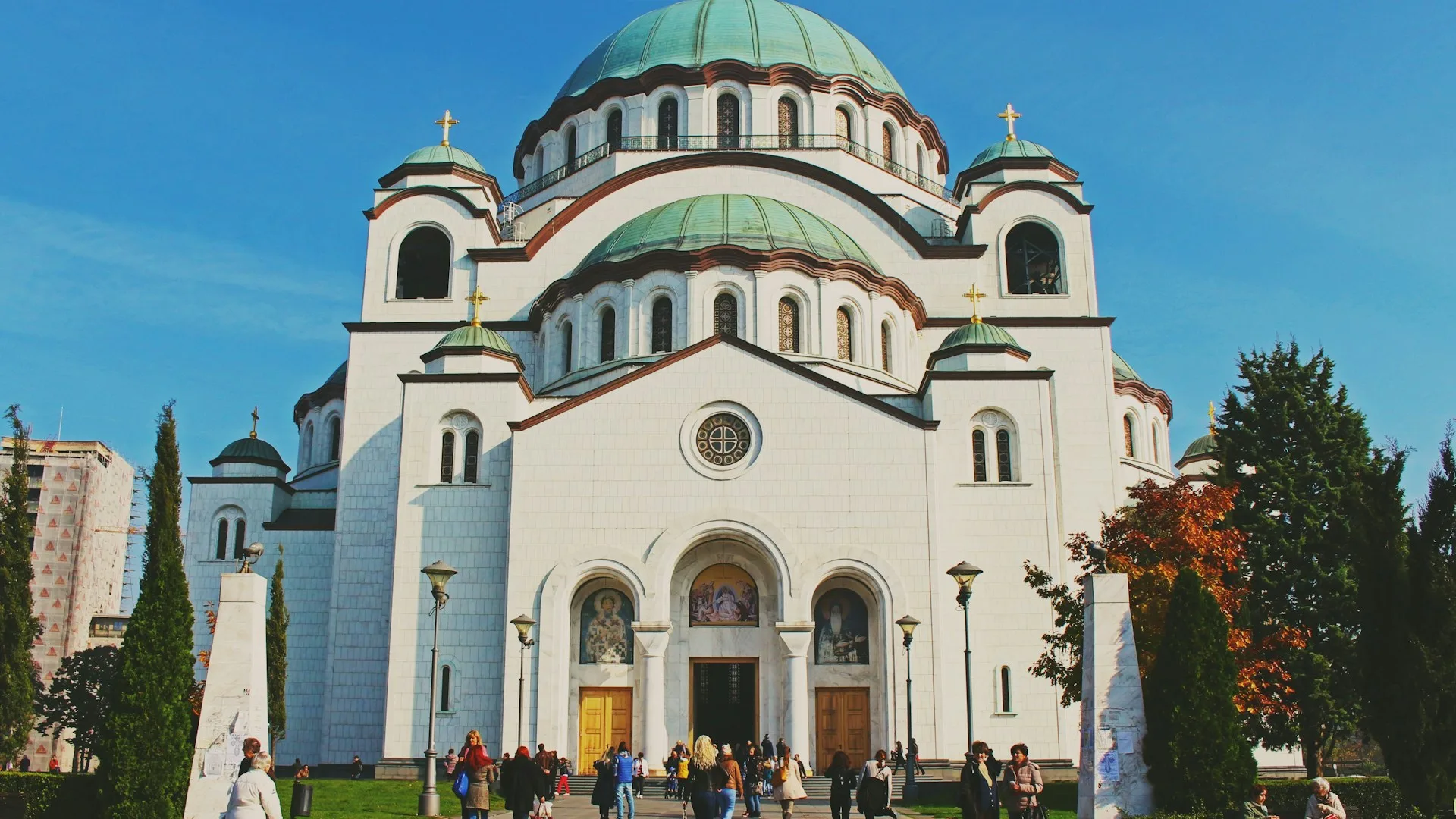
St. Sava Temple
St. Sava Temple in Belgrade is one of the largest Orthodox churches in the world, renowned for its monumental architecture and spiritual significance.
St. Sava Temple, or Hram Svetog Save, is not only a place of worship but also a symbol of national identity for Serbia. Its gleaming white marble and granite façade, crowned by a massive central dome, dominates the Vračar plateau and is visible from many parts of Belgrade. The temple is dedicated to Saint Sava, the founder of the Serbian Orthodox Church, and its construction reflects both spiritual devotion and a turbulent history.
The interior of the temple is equally impressive, featuring intricate mosaics, soaring arches, and a serene atmosphere that invites contemplation. Although construction began in the 1930s, the temple remains a work in progress, with ongoing efforts to complete its lavish decoration. Visitors are welcome to explore the main nave, admire the artistry, and experience the profound sense of reverence that permeates this sacred space.
Visitor Information
| Opening Hours | Typically open daily; check locally for current hours |
|---|---|
| Admission | Free (donations appreciated) |
| Dress Code | Modest attire recommended |
| Photography | Allowed (no flash in some areas) |
1895
Initial Plans
The first plans to build a church dedicated to Saint Sava were proposed.
1935
Construction Begins
Foundation stone laid, marking the start of the long construction process.
1989
Dome Completed
The central dome was lifted into place, a major milestone in the temple’s construction.
Present
Interior Decoration Continues
Work on mosaics and interior finishes is ongoing, with the temple open to visitors.
Tips
- Visit early in the morning or late afternoon for a quieter experience and beautiful light for photography.
- Respect local customs by dressing modestly and maintaining silence inside the temple.
- Don’t miss the crypt, which houses a chapel and a small exhibition about Saint Sava.
Is the St. Sava Temple fully completed?
While the main structure is finished and open to visitors, interior decoration—especially mosaics—remains ongoing.
Can visitors attend religious services?
Yes, regular services are held and visitors are welcome to observe, but be respectful and avoid taking photos during ceremonies.
How do I get to St. Sava Temple from central Belgrade?
The temple is easily accessible by public transport, taxi, or a 30-minute walk from Republic Square.
More places you may like
Related destinations
- Nikola Tesla Museum The Nikola Tesla Museum in Belgrade is dedicated to the life and inventions of the renowned Serbian-American scientist, offering interactive exhibits and a glimpse into Tesla's legacy. Museum
- Republic Square Republic Square is the vibrant heart of Belgrade, renowned for its historic monuments, grand architecture, and bustling city life. A central meeting point, it connects visitors to the city's most important cultural and social landmarks. Landmark
Discover close-by destinations
Nearby places
- Nikola Tesla Museum The Nikola Tesla Museum in Belgrade is dedicated to the life and inventions of the renowned Serbian-American scientist, offering interactive exhibits and a glimpse into Tesla's legacy. Museum
- Republic Square Republic Square is the vibrant heart of Belgrade, renowned for its historic monuments, grand architecture, and bustling city life. A central meeting point, it connects visitors to the city's most important cultural and social landmarks. Landmark
- Skadarlija Skadarlija is Belgrade’s iconic bohemian quarter, famed for its cobbled streets, lively kafanas, and vibrant artistic spirit. A must-visit for those seeking traditional Serbian culture and cuisine. Neighborhood